
Key Takeaways
● A mortgage valuation protects your lender, not you and government guidance says plainly that it is not a survey.
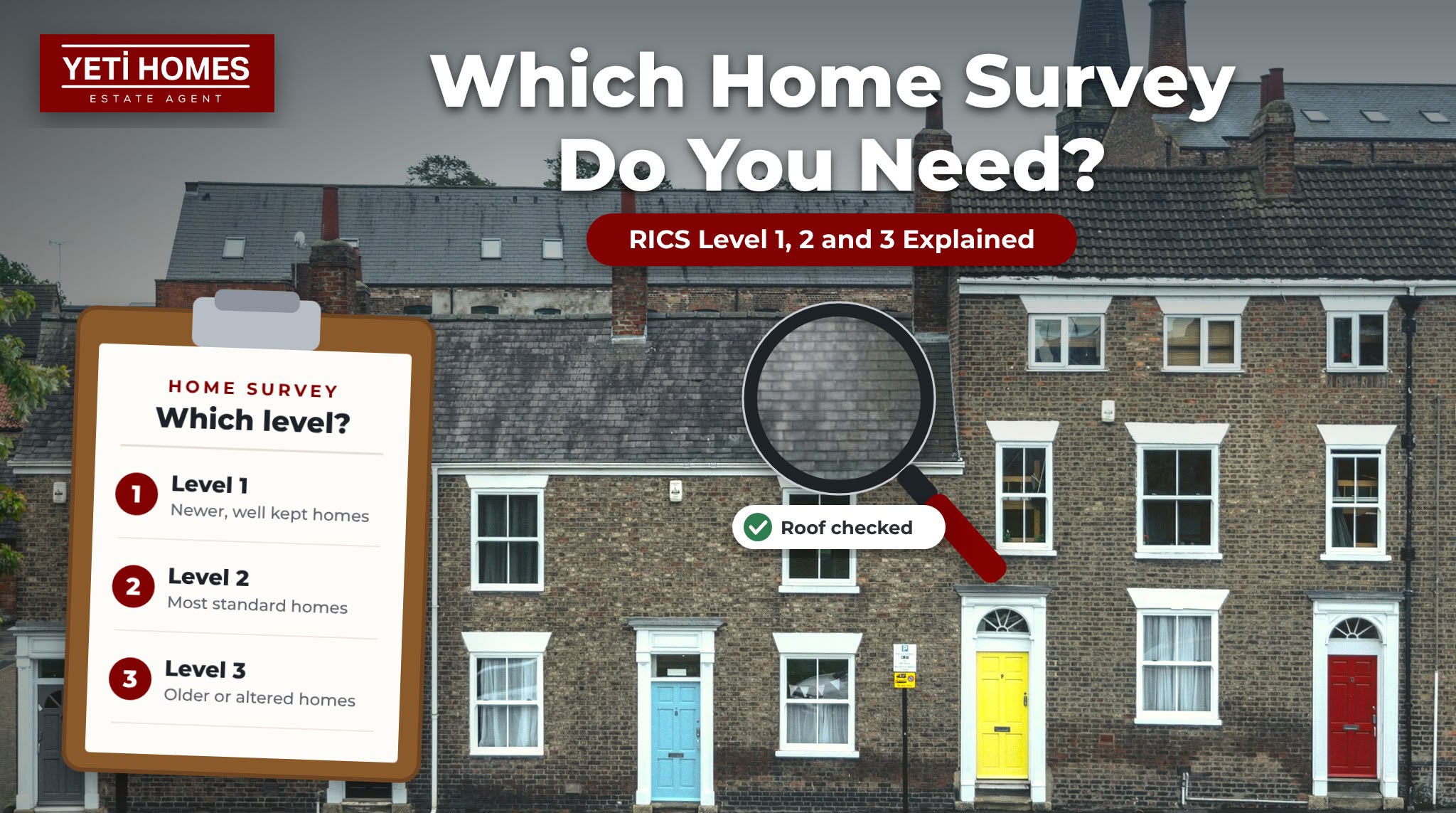
● A Level 1 survey suits newer homes in good condition, while a Level 2 survey suits most standard homes in reasonable repair.
● A Level 3 survey is the right choice for older, altered or unusually built homes.
● Get your survey back before you exchange contracts because until then you can still renegotiate or walk away.
Picture a first time buyer who decides they do not need a home survey because the lender’s valuation came back fine. Six months after moving in, damp patches spread behind the bedroom wardrobe. A builder traces it to a failed roof and blocked gutters and the repair bill runs into thousands.
A Level 2 survey would very likely have flagged the worn roof and blocked gutters and recommended further checks for damp. The buyer could then have lowered the offer, asked the seller to fix it, or walked away before committing.
Many are not aware of the importance of survey so this blog is to provide valuable knowledge and understanding on house surveys.
A Mortgage Valuation Is Not a Survey
When you apply for a mortgage, your lender arranges a valuation to confirm the property is worth enough to lend against. That protects the lender’s money, not you.
The government’s How to buy guide on GOV.UK says a valuation “is not a survey”, does not protect you if something goes wrong with the property, and may not even include a physical inspection. The same guidance says you should strongly consider having a survey carried out.
A survey is a detailed inspection of the property’s condition, done for you. If you are still arranging finance, the Yeti Homes mortgages page is a useful starting point. Once the valuation is in hand, the next question is which level of survey to book.
RICS Level 1, 2 and 3 Surveys: What Each One Covers?
Home surveys in the UK are usually carried out under the RICS Home Survey Standard. RICS (Royal Institution of Chartered Surveyors), the professional body for chartered surveyors, has applied this standard since March 2021. A revised edition is in development, but RICS has not yet set a date for it to take effect.
Level 1 is the most basic report. It gives each part of the property a simple condition rating but offers little advice on repairs.
Level 2 goes further. The surveyor looks for visible problems such as damp, movement or subsidence (where the ground beneath a building sinks) and suggests what to investigate further. You can book it with or without a property valuation.
Level 3 is the most thorough. It goes into greater depth on defects, their likely causes and the options for putting them right. Knowing what each level covers makes it easier to match one to the home you are buying.
Which Survey Level Suits Your Property?
The right level depends on the property’s age, condition and construction, not on which report is cheapest. MoneyHelper, the government backed money guidance service, makes the same point. As a rough guide:
● Newer homes in good condition: a Level 1 survey is often enough.
● Standard homes of conventional construction in reasonable repair: a Level 2 survey suits most buyers.
● Older, listed, extended or unusually built homes, or any home you plan to renovate: a Level 3 survey is the safer choice.
For brand new homes, many buyers book a snagging survey instead (covered in the FAQs below). If you are torn between two levels, the extra cost of the more detailed one is usually small next to the cost of a missed defect. Whatever level you pick, the real value lies in what the report tells you.
What a Survey Can Flag and What to Do Next
Common survey findings include damp, roof wear, cracking and signs of movement. Surveys also pick up extensions or loft conversions that may lack building regulations approval, which is the official sign off that building work meets the required standards. GOV.UK warns that without approval you will not have the certificates you may need when you come to sell.
In homes built before 2000, a surveyor may note materials that could contain asbestos, which the Health and Safety Executive says can be found in any building of that age. They may also spot Japanese knotweed, an invasive plant that GOV.UK guidance says owners must not allow to spread off their land. Treatment usually takes at least three years.
GOV.UK describes exchange as an official legal commitment, so that is your deadline for acting on the report. Before then, you can ask the seller to fix problems, renegotiate your offer or withdraw. Our guide to how long it takes to buy a house shows where the survey sits in the timeline.
Choosing With Confidence
A survey is one of the smaller costs of buying, yet it can prevent the largest surprises. Match the level to the property, book a RICS registered surveyor promptly once your offer is accepted and read the report properly before you exchange.
Every purchase is different. With over 20 years of experience across Swindon, Andover, Aldershot and Ashford, the Yeti Homes team knows the local housing stock well. If you have questions about a home you are considering, get in touch with our team for a friendly, no obligation chat.
Frequently Asked Questions
1. How much does a home survey cost?
The HomeOwners Alliance gives these typical ranges:
– Level 1: £300 to £900
– Level 2: £400 to £1,000
– Level 3: £630 to £1,500
The exact charge depends on the surveyor and company you choose, and on the property’s size, value and location, so compare a few quotes and budget for it alongside costs such as stamp duty.
2. Do you need a survey on a new build home?
In most cases, a snagging survey is worth having. It lists unfinished or faulty work for the developer to fix.
3. Can you use a survey to lower your offer?
Yes, if the report reveals unexpected repairs. Raise it early, as GOV.UK warns that renegotiating close to completion can cause delays or make the sale fall through.
4. When should you book a survey?
Ideally soon after your offer is accepted, although some buyers wait until their lender confirms it will lend, as the GOV.UK How to buy guide notes. Either way, it must come back before you exchange.
5. Should you get a survey on a flat?
Yes. It covers the flat and any shared parts the surveyor can see, such as the roof and communal areas.