Key Takeaways
- Making Tax Digital for Income Tax is now law and applies to landlords with qualifying income over £50,000 from April 2026.
- The threshold drops to £30,000 in April 2027 and £20,000 in April 2028, so most landlords will be pulled in over time.
- Qualifying income means your gross rental income before expenses, not your profit.
- Affected landlords must keep digital records and send HMRC four quarterly updates plus a final declaration each year.
- Missing the rules risks penalties, so setting up compatible software early is worth doing now.
Most landlords assume their tax return works the way it always has. You add up your rent, subtract your costs, and file one Self Assessment each January. For many, that is still true. But for higher earning landlords, the system has already changed.
Making Tax Digital (MTD) for landlords is now law, and the first group of landlords must follow the new rules from April 2026. If that includes you, the way you record and report your rental income has changed for good. Here is what is happening and whether it applies to you.
Is Making Tax Digital Now Law for Landlords?
Yes. Making Tax Digital for Income Tax is law, and it is being introduced in stages rather than all at once.
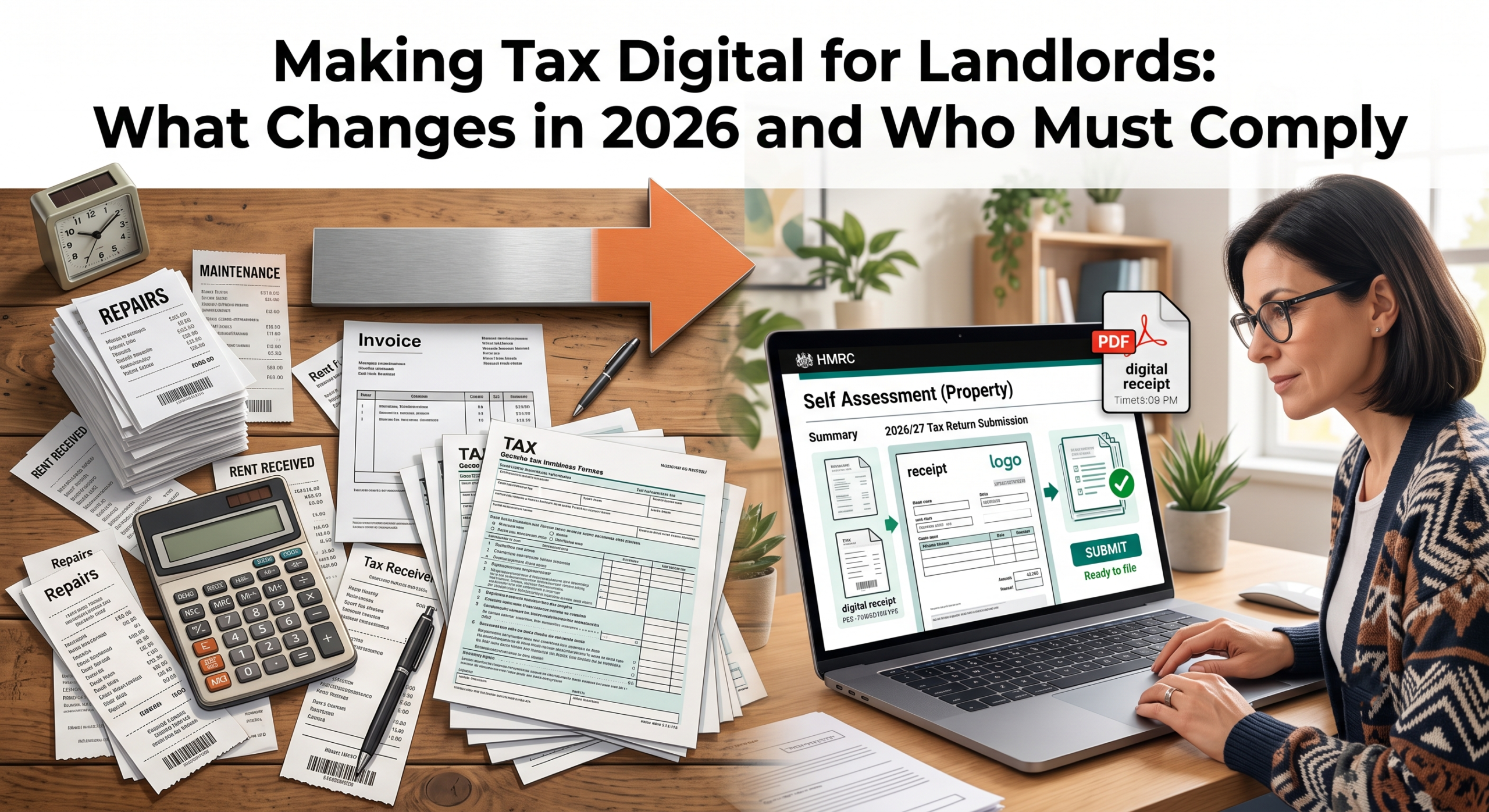
In plain terms, it moves landlords away from a single yearly tax return and towards digital record keeping with regular online updates. Instead of pulling your figures together once a year, you keep them in software as you go and send HMRC a summary every quarter.
According to GOV.UK, the change is designed to reduce errors and give both you and HMRC a clearer, more current picture of what you owe. The paper based, once a year approach is being phased out.
The important word is phased. Not every landlord is affected in 2026. The rules start with the highest earners and widen out over the following two years. So even if nothing has changed for you yet, it is worth understanding the timetable, because the odds are you will be included before long.
Who Must Comply and When
The rules are tied to your income level, and they arrive in three waves.
From April 2026, Making Tax Digital applies to landlords with qualifying income over £50,000. From April 2027, the threshold drops to £30,000. From April 2028, it falls again to £20,000, capturing a large share of the private rented sector.
The term that trips people up is qualifying income. This is your gross rental income before you take off any expenses, added to any self employed income you may have. It is not your profit. So a landlord receiving £52,000 in rent a year is over the threshold, even if their actual profit after mortgage interest and costs is far lower.
HMRC has confirmed that around 780,000 people with business or property income over £50,000 are expected to join from April 2026. If you own more than one property, or you let alongside self employed work, it is easy to cross the line without realising. Checking your gross figures now is the simplest way to know where you stand.
What Landlords Actually Have to Do
If you are within the rules, three things change in practice.
First, you must keep digital records of your rental income and expenses using compatible software. A shoebox of receipts or a basic spreadsheet on its own will no longer meet the requirement.
Second, you send HMRC four quarterly updates through that software, each summarising your income and costs for the period.
Third, after the tax year ends, you submit a final declaration that confirms your figures and replaces the old Self Assessment return.
In short, one annual task becomes five smaller ones. That sounds like more work, and at first it is a change of habit. But keeping records as you go often makes the year end far less stressful, and a good landlord relies on staying organised month to month.
The official HMRC step by step guidance stresses using recognised software rather than trying to work around the system. Getting this right protects you from penalties later.
How to Get Ready Before It Applies to You
The best time to prepare is before your start date, not after it.
Start by checking your qualifying income against the thresholds so you know which wave you fall into. If you are close to a threshold, plan as though you will be included. Next, choose MTD compatible software and get comfortable using it while the stakes are low. Many landlords also move their record keeping into digital form now, even if their deadline is 2027 or 2028, simply to build the habit.
If the admin feels daunting, you do not have to manage it alone. An accountant can handle your quarterly submissions, and a good letting agent can keep your income and expense records clean and current throughout the year. With over twenty years of experience, the team at Yeti Homes helps landlords stay organised so tax time never becomes a scramble.
Conclusion
Making Tax Digital is not a distant proposal. It is law, and for landlords earning over £50,000 it is already here. Over the next two years it will reach almost everyone who lets property in the UK.
The change asks for digital records and quarterly updates rather than a single yearly return. That is a real shift in routine, but it is a manageable one, especially if you prepare early rather than waiting for your deadline to arrive.
The landlords who cope best will be the ones who set up their systems now, understand their numbers, and get the right support in place before the rules apply to them.
Every landlord’s situation is different, and the right approach depends on your income, your portfolio, and how hands on you want to be. Whether you need help staying compliant or simply want your rental accounts kept in good order, the team at Yeti Homes is here to help. With two decades in the UK property market, we offer straightforward, no pressure guidance. Get in touch with us today and we will talk you through your options.
Frequently Asked Questions
Q. Is Making Tax Digital compulsory for all landlords in 2026?
Ans: No. From April 2026 it is only compulsory for landlords with qualifying income over £50,000. Lower earners join in 2027 and 2028.
Q. What counts as qualifying income for MTD?
Ans: It is your gross rental income before expenses, plus any self employed income. It is not your profit after costs.
Q. Do I still file a Self Assessment tax return under MTD?
Ans: Not in the old form. Quarterly updates and a year end final declaration replace the single annual Self Assessment return for those in scope.
Q. What software do I need for Making Tax Digital?
Ans: You need HMRC recognised MTD compatible software to keep digital records and send your updates. HMRC publishes a list of approved options.
Q. What happens if I do not comply with MTD?
Ans: You risk penalties for late or missing submissions. Setting up early and keeping digital records is the simplest way to avoid them.