
Key Takeaways
- Government figures put the average home purchase at around 120 days from accepted offer to completion.
- Nothing is legally binding until contracts are exchanged, so either side can still walk away before that point.
- Your stamp duty return must be filed and any tax paid, within 14 days of completion.
- Instructing a conveyancer early and answering questions quickly are two of the simplest ways to avoid delays.
Once an offer is accepted, the first question most buyers ask is simple: how long does it take to buy a house from here? According to the government’s own figures, the average purchase takes around 120 days from accepted offer to completion. That is roughly four months, although every purchase moves at its own pace.
This blog covers buying a home in England. It walks through each stage, what exchange and completion mean and how to keep things on track.
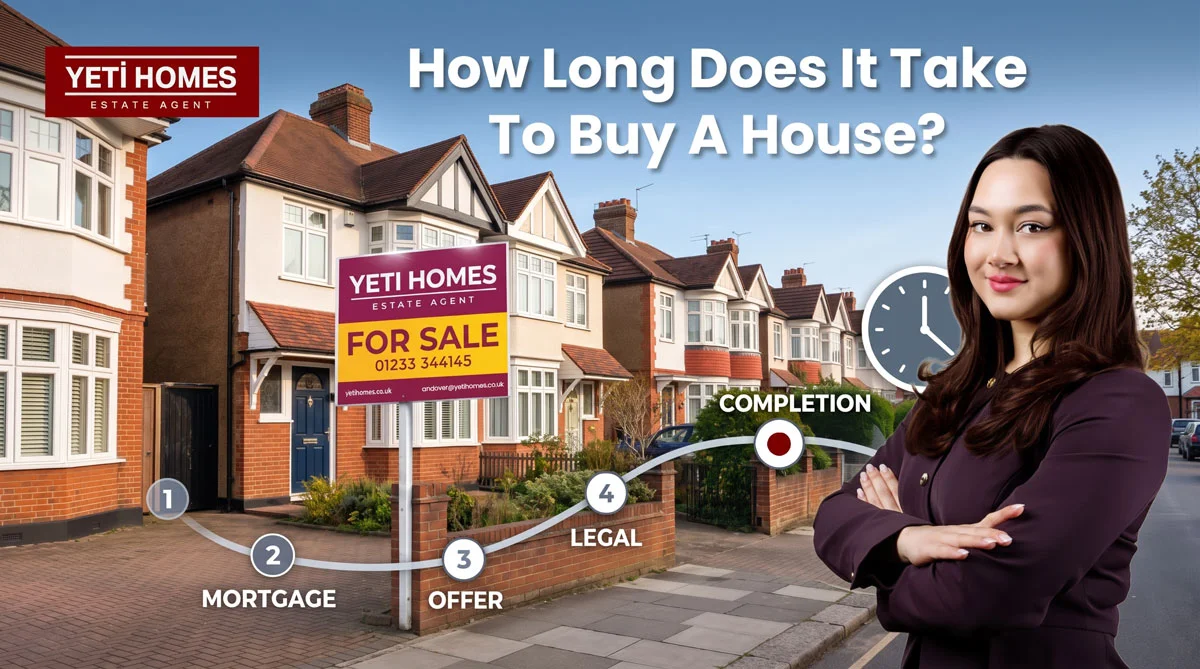
The Main Stages of Buying a House
Buying a home follows a fairly set order, even though the time each step takes can vary.
- Once your offer is accepted, you apply for your mortgage in full and instruct a conveyancer. A conveyancer is the solicitor or licensed specialist who handles the legal side of the purchase.
- Your lender arranges a valuation to check the property is worth what it is lending. Meanwhile, your conveyancer checks the legal title, orders searches and raises questions with the seller’s side. Searches are checks with the council and other bodies on things like planning, drainage and flood risk.
- You will also want to arrange your own survey. GOV.UK guidance on buying a home is clear that a mortgage valuation is not the same as a home survey, because the valuation is carried out for the lender rather than for you.
Once all of this is in place, you move on to exchange and completion, which are the two steps where the purchase becomes real.
Exchange and Completion Explained
Exchange of contracts is the point at which the purchase becomes legally binding. You and the seller swap signed contracts, you pay your deposit and a completion date is fixed. Before exchange, either side can still withdraw. After it, pulling out can mean losing your deposit and potentially paying compensation.
Because you are committed from exchange, the same GOV.UK guidance recommends having buildings insurance arranged by then. The gap between exchange and completion is agreed between buyer and seller.
Completion is the day the remaining money is transferred to the seller’s conveyancer and you collect the keys. Your conveyancer then registers you as the new owner with HM Land Registry. This can take a while but it does not hold up your move, as HM Land Registry confirms that legal ownership rights are secured from the moment your application is received.
With the stages clear, it helps to know what can stretch the timeline.
What Can Affect How Long It Takes to Buy a House
A few factors tend to make the biggest difference to how long a purchase takes.
- A property chain. If your seller is also buying, each purchase depends on the others. Everyone in the chain needs to be ready before anyone can exchange.
- Survey findings. If the survey raises issues, you may want further checks or to renegotiate the price.
- The mortgage valuation. If the lender values the home below the agreed price, the price or your deposit may need revisiting.
- Leasehold properties. Flats and some houses need extra information from the freeholder or managing agent, such as service charge details.
- Response times. Questions pass between buyer, seller, conveyancers and lenders and a delay anywhere in that loop slows everyone down.
Some of these are within your control, which is where preparation pays off.
Simple Ways to Keep Your Purchase Moving
Most delays on the buyer’s side come down to paperwork and timing, so getting organised early makes a real difference.
- Get a mortgage in principle before you start viewing homes for sale.
- Choose your conveyancer early and instruct them as soon as your offer is accepted.
- Have your ID and proof of funds ready. Conveyancers must carry out anti money laundering checks, including where your deposit comes from.
- Book your survey promptly so any issues come to light early.
- Reply to questions from your conveyancer and lender quickly.
If you would like help getting your finances in order before you start, our mortgages team can talk you through the options.
So, how long does it take to buy a house? Around four months is a sensible guide, based on the government’s average, but it is a guide rather than a promise.
What you can control is how prepared you are. Understanding each stage and responding quickly both help your purchase move smoothly. If you are still weighing up whether now is the right time, our guide on whether renting is still worth it or it is time to buy may help.
Every purchase is different, and questions along the way are normal. With over 20 years of experience helping buyers across Swindon, Ashford, Basingstoke, Salisbury, Camberley, Andover and the wider Kent area, the Yeti Homes team knows how local sales tend to progress. When you are ready to talk it through, get in touch with our team for friendly, no obligation advice.
Frequently Asked Questions
1. What is the difference between exchange and completion?
Exchange is when signed contracts are swapped and the purchase becomes legally binding. Completion is when the money is transferred and you collect the keys. The completion date is agreed at exchange, as set out in GOV.UK guidance.
2. Can I pull out of buying a house before the exchange?
Yes. Until contracts are exchanged, neither buyer nor seller is legally committed, so either can withdraw. You may still lose money already spent on surveys, searches and legal fees, so it is worth thinking carefully first.
3. Do I need a survey if my lender does a valuation?
In most cases, it is sensible to get one. A mortgage valuation is carried out for the lender and is not a check on the property’s condition. RICS explains the different survey levels available.
4. When do I pay stamp duty?
You must file a Stamp Duty Land Tax return and pay any tax due within 14 days of completion, according to GOV.UK. Your conveyancer usually handles this for you. First time buyers may pay less or nothing, which our first time buyer stamp duty guide explains.
5. Is buying a house quicker without a chain?
It often is, because fewer sales need to line up before anyone can exchange. It depends on your circumstances, as the legal work and mortgage still need to be done.