
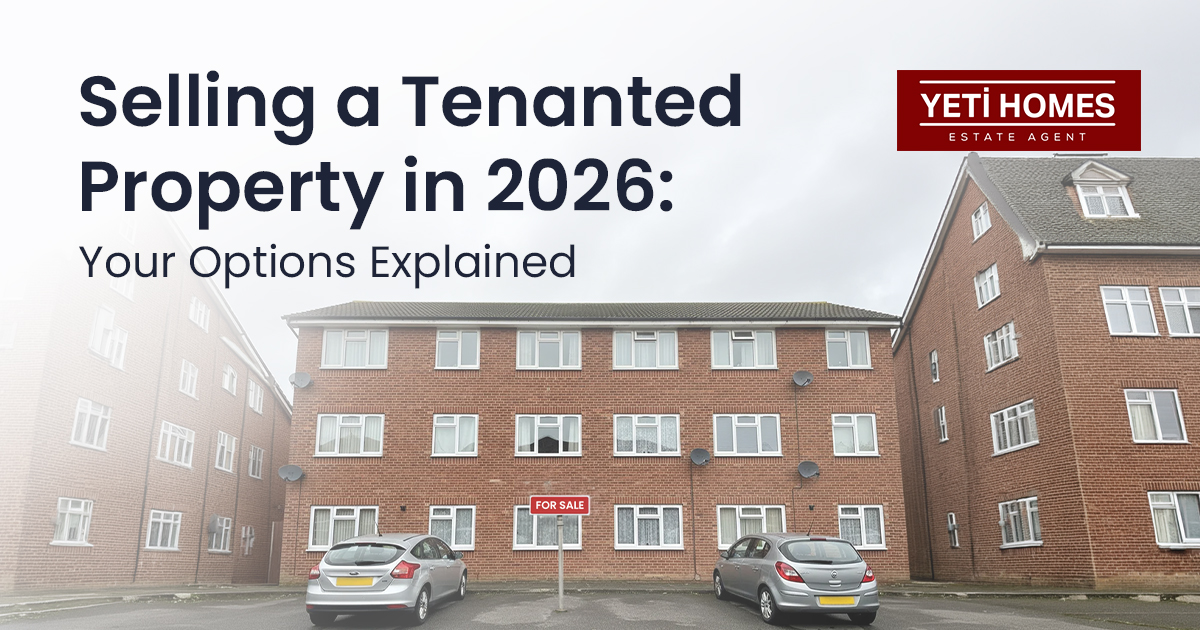
Selling a tenanted property in England looks different in 2026. Since 1 May 2026, landlords can no longer use a section 21 notice to end a tenancy. You can keep the tenant in place, sell to the tenant, or ask the tenant to leave using a legal reason called Ground 1A.
Each route has its own timescale, buyers and costs. This guide covers the notice rules, the pros and cons of each route and the tax to plan for.
Can you sell a house with tenants still living in it?
Yes. Landlords in England can sell a house with tenants in it, and the tenancy simply carries on with the buyer as the new landlord. The tenant keeps the same rights, and the rent keeps coming in while the property is on the market.
The buyer will usually be a property investor. Investors who will own more than one home after buying usually pay an extra 5% on top of normal Stamp Duty Land Tax rates. That cost can shape what they offer.
Investors will want the tenancy paperwork, rent history and safety certificates, so have them ready. Yeti Homes also works with property investors who buy homes to let. If keeping the tenant does not fit your plans, the next option is asking them to leave.
What is Ground 1A and how does it work when selling?
Ground 1A is a legal reason for possession that lets a landlord in England ask a tenant to leave because they intend to sell. It comes with strict rules on timing.
The GOV.UK grounds for possession guidance says you must give four months’ notice. Notice cannot expire within the first 12 months of a new tenancy, known as the protected period. Ground 1A also cannot be used for assured tenancies created before 1 May 2026 that were never assured shorthold tenancies.
The GOV.UK guide to the Renters’ Rights Act adds a further rule. After using the selling ground, landlords cannot market the property to let, or relet it, for 12 months. Selling it is still allowed.
| Rule | What it means for you |
|---|---|
| Notice period | At least four months |
| Protected period | Notice cannot expire in the first 12 months of a tenancy |
| Tenant does not leave | You must apply to court for a possession order |
| Property does not sell | No marketing to let or reletting for 12 months |
| Older lifetime assured tenancies | Ground 1A cannot be used |
If the tenant stays after the notice ends, the court process is explained in the GOV.UK guidance on repossessing a privately rented property. With these rules in mind, it helps to weigh the two main routes side by side.
Selling with tenants or selling empty: the pros and cons
Selling empty usually reaches more buyers. Selling with tenants keeps rent coming in and avoids the notice wait.
| Selling with tenants | Selling empty under Ground 1A | |
|---|---|---|
| Buyers | Mainly investors | First time buyers, home movers and investors |
| Timescale | Can go on the market straight away | Four months’ notice first, longer in the first year |
| Rental income | Continues during the sale | Stops once the tenant leaves |
| Viewings | Depend on the tenant’s cooperation | Easier to arrange and present |
| Main risk | A smaller pool of buyers | No reletting for 12 months if the sale falls through |
Before deciding, think about:
- Your mortgage. Once the tenant leaves, the rent stops but mortgage payments do not, so check you can cover them.
- Your tenant. A reliable tenant with a good payment record can appeal to investors.
- Timing. Ground 1A dates may decide when the property can reach the open market.
The Yeti Homes sales team can talk through which route fits your property. There is also a third option that is easy to overlook.
Can you sell your property to the sitting tenant?
Yes. A sitting tenant is the tenant already living in the property. Selling to them means no notice period, no empty months and no public viewings.
The main hurdle is finance. The tenant will need a deposit and a mortgage offer, so ask early whether buying is realistic. Both sides should still use a conveyancer. Whichever route you choose, tax is the final piece to plan for.
What tax do landlords pay when selling a buy to let in 2026?
Landlords who own a buy to let in their own name usually pay Capital Gains Tax if they sell it for more than they paid. Capital Gains Tax is a tax on the profit made when you sell an asset that has gone up in value.
According to GOV.UK, gains made from 6 April 2026 are taxed at 18% within the basic rate band and 24% above it. The tax free allowance is £3,000. Buying, selling and improvement costs can usually be deducted.
Timing matters as well. You must report and pay any Capital Gains Tax due within 60 days of completion. Late payment can bring interest and a penalty, so speak to an accountant before you sell.
Selling a tenanted property in 2026 is still very achievable, but it takes more planning than before. The right route depends on your tenant, your finances and how soon you need to sell.
Start with the tenancy dates, because they decide when Ground 1A can apply. Then weigh up the pros and cons of each route, and book a free valuation so you know what the property is worth.
Every landlord’s situation is different. Yeti Homes handles sales and lettings from offices in Swindon, Camberley, Andover and Ashford. If you are weighing up your options, get in touch with our local team for friendly, no obligation advice.
Frequently Asked Questions
Can a landlord in England sell a tenanted property without asking the tenant to leave?
Yes. The tenancy continues after the sale, and the buyer becomes the new landlord with the same responsibilities to the tenant.
How much notice must a landlord in England give a tenant to sell the property in 2026?
At least four months under Ground 1A. The notice cannot expire within the first 12 months of a new tenancy.
Can a landlord in England relet a property after using Ground 1A if the sale falls through?
No. Landlords cannot market the property to let or relet it for 12 months after using the selling ground, with a limited exception for shared owners.
What Capital Gains Tax rate do landlords pay on a buy to let sale in 2026?
18% within the basic rate band and 24% above it, on gains over the £3,000 allowance. Any tax due must be reported and paid within 60 days of completion.
Can landlords in England use Ground 1A for tenancies that started before 1 May 2026?
Usually, yes. Ground 1A cannot be used for older assured tenancies that were never assured shorthold tenancies, sometimes called lifetime tenancies.