
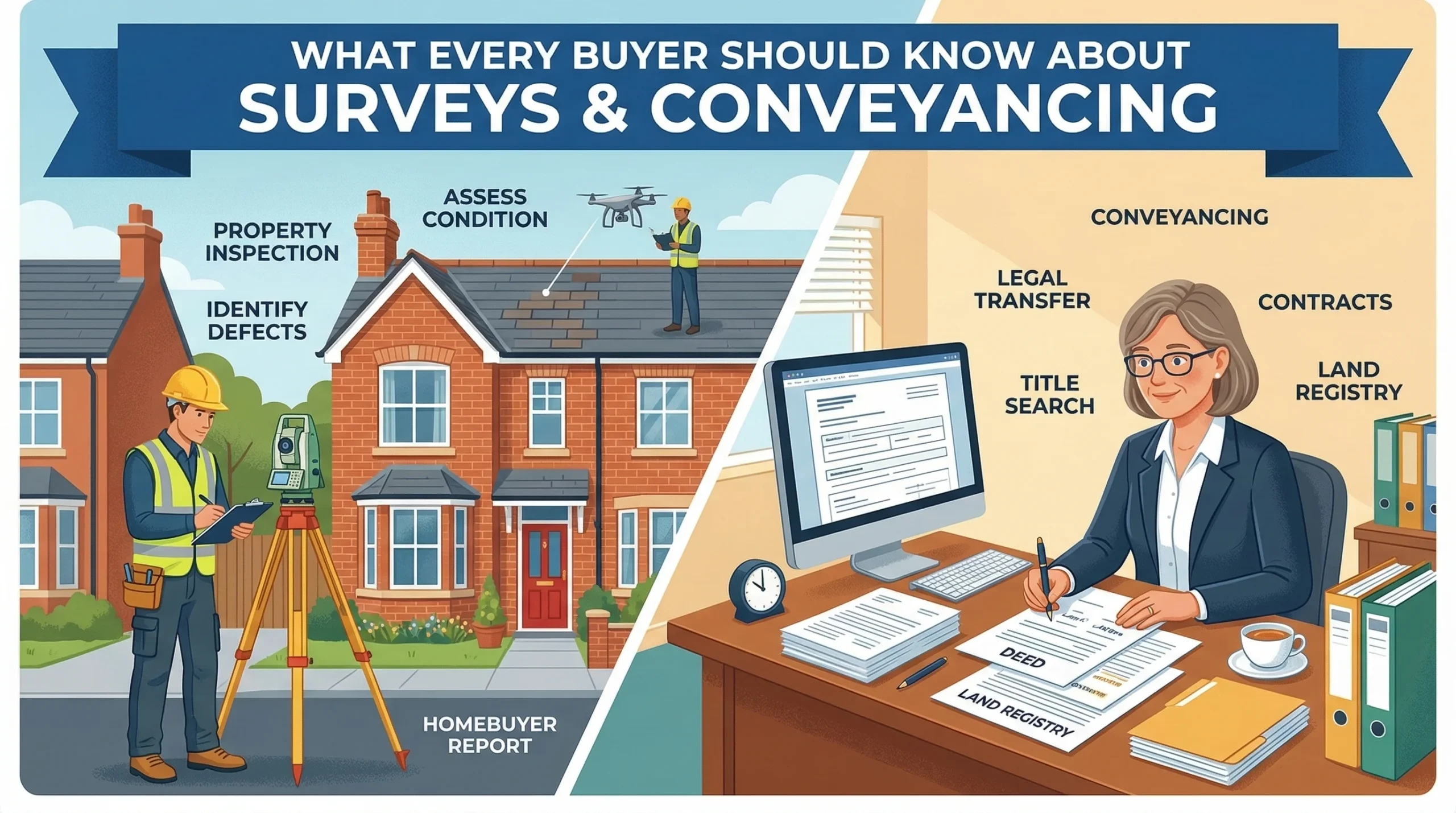
Key Takeaways
- A mortgage valuation is carried out for your lender, not for you. Always commission a separate property survey.
- Choose your survey level based on the age, type and condition of the property you are buying.
- The conveyancing process typically takes between 8 and 16 weeks. Instructing a solicitor early reduces costly delays.
- Nothing is legally binding until contracts are exchanged. Speed and communication matter throughout.
- Working with an experienced agent such as Yeti Homes means you have expert support at every stage of the journey.
Buying a home is one of the biggest financial decisions most people will ever make. Yet two of the most important steps in the process — getting a survey and instructing a conveyancer are often the least understood. Whether you are a first time buyer stepping onto the property ladder, a home mover looking for your next chapter, or a landlord expanding your portfolio, understanding these steps can save you thousands of pounds and a significant amount of stress.
At Yeti Homes, we have supported buyers through hundreds of property transactions. The questions we hear most often are: Do I really need a survey? And what does a conveyancer actually do? This guide answers both, clearly and without the jargon.
Understanding Your Survey Options
One of the most common misconceptions buyers hold is that the mortgage valuation carried out by their lender is the same as a survey. It is not, and this misunderstanding can be an expensive one.
A mortgage valuation is carried out on behalf of your lender, not you. Its sole purpose is to confirm that the property is worth the amount being borrowed. It does not assess the physical condition of the building in any meaningful detail, and in many cases you will never even see the report.
A property survey, by contrast, is carried out entirely for your benefit. It examines the physical condition of the home and highlights anything that could cost you money further down the line. There are three main survey types in the UK, all regulated by the Royal Institution of Chartered Surveyors (RICS):
Level 1 — Condition Report: The most basic option. It provides a traffic light overview of the property condition and is best suited to newer homes in good shape. It does not include a valuation or detailed advice.
Level 2 — Homebuyer Report: The most popular choice for buyers of standard residential properties. It covers the main structure and flags visible defects, damp, subsidence risks and urgent repairs. A market valuation is typically included.
Level 3 — Full Building Survey: The most thorough option available. Strongly recommended for older homes, listed buildings, unusual construction types, or any property where structural concerns exist. It provides a detailed analysis of the building, including hidden defects where accessible, along with repair recommendations.
| Yeti Homes tip: As a rule of thumb, the older or more unusual the property, the more thorough your survey should be. Spending a few hundred pounds more on a Level 3 survey could save you tens of thousands in unexpected repair costs after you have moved in. |
What Is Conveyancing and Why Does It Matter?
Conveyancing is the legal process of transferring ownership of a property from one person to another. It sounds relatively straightforward but in practice it involves a considerable amount of legal work, correspondence and due diligence on your behalf.
You will need to instruct a licensed conveyancer or solicitor to manage this process for you. They will carry out searches, check the title deeds, raise enquiries with the seller’s solicitor, review the contract and ultimately manage the exchange of contracts and completion.
It is important to understand that nothing is legally binding until contracts are exchanged. Either party can withdraw from the sale before that point without legal penalty. This is why buyers are often keen to move through the process as smoothly and efficiently as possible.
The Conveyancing Process: From Offer Accepted to Keys in Hand
Once your offer has been accepted, here is what you can broadly expect to happen:
1. Instruct a conveyancer — Do this as soon as your offer is accepted. Delays at this early stage have a knock on effect throughout the entire process.
2. Searches are ordered — Your conveyancer will commission local authority searches, water and drainage searches, and environmental checks to identify anything that could affect the property or your decision to proceed.
3. Survey is instructed — Book your survey early. Results may affect your decision to proceed, give you grounds to renegotiate the purchase price, or help you plan for future repairs.
4. Enquiries and contract review — Your conveyancer raises questions with the seller’s solicitor and reviews the draft contract in detail.
5. Exchange of contracts — Once both parties are satisfied, contracts are exchanged, a completion date is agreed and you pay your deposit. At this point the transaction becomes legally binding.
6. Completion — The remaining funds are transferred, the title is registered with HM Land Registry, and you receive the keys to your new home.
The full process typically takes between 8 and 16 weeks, though this varies depending on the length of the chain, mortgage processing times and how promptly all parties respond to correspondence.
Common Mistakes Buyers Should Avoid
Skipping or downgrading a survey to keep costs down is one of the most frequently regretted decisions buyers make. A full building survey on an older property might cost between £600 and £1,500, but could reveal defects that allow you to renegotiate thousands off the asking price — or walk away from a poor investment altogether.
Equally, choosing a conveyancer on price alone can slow things down considerably. A slightly higher fee for a proactive and communicative solicitor is almost always money well spent. Delays in conveyancing cause transactions to fall through far more often than most buyers realise.
Finally, do not underestimate how much smoother the process becomes when you have experienced professionals by your side from the outset. Knowing who to call, what to ask and when to push for progress is invaluable.
How Yeti Homes Supports You Through the Process
At Yeti Homes, we do not simply list properties and hand over the keys. We guide our clients through every stage of the buying journey — from helping you understand what type of survey is right for your property, to connecting you with trusted conveyancers and keeping the process moving when things get complicated.
If you are thinking about buying and want to understand your options, explore our buying guide or take a look at how we approach property valuations to get a sense of how we work.
When you are ready to take the next step, our friendly team is always happy to have a no obligation conversation. Simply get in touch with Yeti Homes and we will take it from there.
Frequently Asked Questions
1. Do I legally have to get a survey when buying a house in the UK?
No, a property survey is not a legal requirement. However it is strongly advisable. Without one, you have no independent assessment of the property’s physical condition before committing to the purchase. If a problem surfaces after completion, the cost falls entirely on you.
2. How much does a building survey cost in the UK?
Costs vary depending on the size, age and location of the property. A Level 2 Homebuyer Report typically ranges from £400 to £1,000. A Level 3 Full Building Survey can cost between £600 and £1,500 or more for larger or older homes. These figures are a guide and surveyors may quote differently based on the specific property.
3. What is the difference between a conveyancer and a solicitor?
Both are legally qualified to handle property transactions in the UK. A licensed conveyancer specialises exclusively in property law. A solicitor is a qualified lawyer who can handle property alongside other areas of law. Either can manage your transaction well — what matters most is their experience with residential property and how responsively they communicate.
4. Can a survey result in a lower purchase price?
Yes, absolutely. If a survey reveals significant defects or required repairs, many buyers use the findings to renegotiate the purchase price or request that remedial works are completed by the seller before completion. This is entirely normal practice in the UK property market and represents one of the strongest reasons to commission a thorough survey.
5. What happens if the conveyancing searches reveal a problem?
Your conveyancer will advise you on the implications of any issue that surfaces. Depending on the nature of the problem — such as a flood risk, an unresolved boundary dispute or a planning restriction — you may choose to proceed, renegotiate the terms, or in some cases withdraw from the purchase entirely. This is precisely why searches are so important and why having an experienced solicitor in your corner makes such a difference.